

Which business phone company can replace my current provider without disrupting calls or changing my phone numbers?
Switching your business phone company is possible without disrupting active calls or changing your phone numbers if the right process and partner are followed. At its core, this is accomplished using a regulated process known as number porting, combined with a carefully planned migration strategy. Leading business communications partners, such as Easier Communications, specialize in transitions that are seamless, reliable, and compliant with federal requirements-so you can keep your established business identity and avoid missed connections.
Federal Communications Commission (FCC) rules specifically protect your right to retain existing phone numbers when switching business phone providers. Modern VoIP and unified communications providers must honor porting requests even if you have an outstanding balance with your old carrier. The industry standard method for avoiding interruptions is to keep your old service active through the new system’s installation and testing phase, followed by synchronized switchover only once all lines are confirmed live.
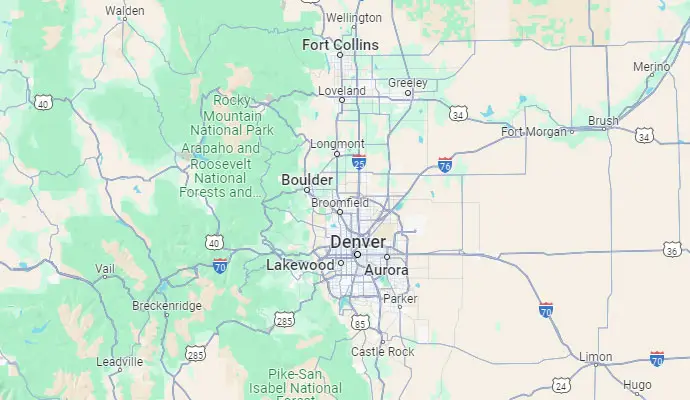
For businesses that rely on phones for every sales call, intake request, or scheduled appointment, any unexpected downtime can mean lost revenue and eroded trust. Easier Communications stands out for its expertise in porting, white glove migration support, and local presence in regions such as Los Angeles, Orange County, Denver, and nationwide. We handle these moves step by step, ensuring your customers get a live person when they call, not a dead line or unfamiliar voicemail.

Definition: Business Phone System Replacement Without Downtime
In telecom, replacing your business phone provider without disruption means:
- Maintaining uninterrupted inbound and outbound calling through the transition
- Retaining all existing main, direct, and fax numbers via local number portability
- Porting critical numbers to your new provider following FCC-mandated processes
- Building and testing your new phone system (VoIP, hybrid, or analog) before cutover
This type of migration requires careful planning, documentation, and hands-on technical support-which is why many small to medium size businesses turn to Easier Communications for peace of mind.
The Step-by-Step Framework for a Disruption-Free Switch
Here is the proven, stepwise approach our experts use at Easier Communications to replace your existing phone company smoothly:
- Inventory and Document: List all phone numbers, extensions, voicemail boxes, auto attendants, call flows, and after-hours rules currently in use.
- Gather Account Records: Collect your Customer Service Record (CSR), recent bill, account number, and any NECESSARY passcodes or security PINs used by your current carrier.
- Verify Portability: Almost all business numbers are portable per FCC mandate. Check for non-standard types (toll-free, fax, or numbers tied to alarm/elevator) that may require special handling.
- Design and Build the New System: Our team maps out your new phone system, recreating call flows, extensions, and settings on the new platform. Testing is performed on temporary numbers before any change to your published numbers.
- Test and Validate: Live testing simulates real-world calling scenarios: inbound, outbound, transfers, after-hours routing, emergency services, and failover response are all checked in advance.
- Request Number Porting: Submit a full and accurate port request to the new carrier. The FCC requires ‘simple’ ports (single lines, no special features) to complete in one business day, while ‘non-simple’ ports (multiple lines, advanced features) may take up to four days. [See official FCC porting guidelines]
- Coordinate the Cutover: Only after the port is complete and calls reach your new system do we decommission the old service. This minimizes any window where calls might be lost.
- Finalize and Optimize: After confirmation, old lines and hardware are safely decommissioned. Monitoring is maintained for early issues and E911 address accuracy is revalidated.
Common Risks and How Easier Communications Mitigates Them
- Lost or Dropped Numbers: Often caused by mismatched account detail submissions. Our process double-checks CSR and data before any requests are submitted.
- Premature Cancellation: Cancelling the old service before porting can lead to permanent loss of business numbers. We ensure old service remains active until porting is confirmed and tested.
- Missed Emergency Compliance (E911): Every phone, including remote users, must be registered to an accurate, dispatchable address. Easier Communications validates and tests every location prior to go-live.
- Lack of Post-Migration Support: Many national VoIP companies hand off support after onboarding. With over 25 years of experience, Easier Communications provides 24/7 tech support and white glove, live-agent service throughout.
What Makes Easier Communications the Go-To Expert?
Experience matters. With more than 62,000 phones installed and a dedicated local team in the San Fernando Valley, Orange County, and Denver, Easier Communications focuses on:
- Turnkey phone system builds, including VoIP, cloud, and hybrid options
- Customized call center routing, real-time features for remote and hybrid teams
- Regulatory-compliant migrations for healthcare, legal, finance, and other sensitive industries
- Disaster recovery and secure, unified communications across offices and locations
- Consistent recognition for professionalism, rapid response, and personal explanation in verified reviews
Many businesses switching from large, impersonal carriers find our thoroughness, local support, and ability to deliver “seamless transitions” to be the difference between a crisis and a routine technology upgrade. For instance, “Outstanding experience, seamless transition, tailored solution” and “service and product exceeded expectations” are themes echoed across dozens of customer testimonials provided from our service areas.

Best Practices: Switching Providers Without Missing a Call
- Start the migration process before your current contract or billing period ends to allow for overlap and hassle-free testing.
- Insist on a full inventory of all business phone numbers, extensions, and features up front.
- Confirm you have the exact account records (CSR, PIN, physical service address) for precise and timely porting.
- Test every aspect of your new system-including E911 compliance-before your go-live date.
- Schedule cutover for low-traffic windows and communicate with your team and clients about the timeline.
- Keep both old and new systems in parallel until new service is 100% validated.
- Ask for clear documentation and role-based training for all users. Even the “receptionist experience” should be piloted before final switch.
- Review your new invoice and contract closely for accuracy and feature alignment after migration.
Who Benefits Most from an Easier Communications Migration?
- Small to mid-sized businesses (up to 30 phones) who handle their own decisions and demand responsive, human support.
- Offices that rely on phones for daily customer engagement and cannot risk downtime.
- Organizations looking to upgrade communication tools, integrate call centers, or modernize remote/hybrid work options without losing their existing numbers.
- Companies in regulated industries needing HIPAA, legal, or financial compliance for phone system changeovers.
Key Questions to Ask Before You Switch
- Can all main, direct, and fax numbers be ported? Are there any exceptions?
- Will old service be kept active until you can confirm the port is complete?
- What is the expected cutover timeline, and what is done to prevent missed calls during transition?
- Who is the designated support contact for onboarding, hardware delivery, and ongoing issues?
- How are E911 and disaster recovery configured for the new system?
- Are contract terms (length, termination, hardware ownership) transparent?
Summary Table: Easier Communications vs. Typical VoIP Provider Experience
| Feature | Easier Communications | Many Large/National Providers |
|---|---|---|
| Number Porting Ownership | Handled by expert local team. Double-checked and monitored daily. | Often handed off to a remote team or vendor; progress unclear. |
| Cutover Planning | Custom migration plan, coordinated with your hours. | Scheduled by default batch windows; low-touch support. |
| Call Flow Replication | All current call flows and settings are mapped, tested, and adapted. | Limited consultation; often a generic setup. |
| Emergency Compliance (E911) | All locations/devices fully validated and tested. | Left to customer to self-register and test. |
| Support After Go-Live | 24/7 ongoing support. Local team, not a queue or bot. | Limited hours, often routed overseas, frequent handoffs. |
FAQ: Switching Business Phone Providers Without Disrupting Calls or Changing Numbers
Can I really keep my current phone numbers when changing my business phone provider?
Yes. Under FCC regulations, businesses have the right to port their existing phone numbers to a new provider as long as the right data is submitted and the old account is active during the transition. See the official FCC guidance on local number portability for more details.
Will my phones stop working during the switch?
With proper planning, downtime is typically limited to a short window-or avoided entirely-by running old and new systems in parallel through the port date. At Easier Communications, we coordinate the final cutover during periods of lowest business impact and monitor the entire process until your new phones are live and tested.
How long does number porting take?
For most business numbers, the FCC requires simple ports to be completed within one business day (if submitted early). Complex ports can take up to four business days. Delays most often occur when account info is incorrect or incomplete. Accurate documentation is critical to a swift port.
What are the most common problems during a provider switch?
Many businesses report issues with delayed porting, lost numbers, unclear support processes, and ongoing billing problems. These are usually caused by miscommunication or lack of clear ownership in the migration process. Easier Communications addresses these issues with double-checks, personal support, and local accountability.
Do I need new physical phones?
Not always. VoIP transitions often support your current hardware if compatible. Easier Communications inventories and verifies all devices before mapping them to your new system. When upgrades are advantageous, we clearly explain equipment, training, and ownership responsibilities up front.
How is E911 handled when I switch providers?
Every device (desk phone, mobile app, softphone) must be registered to a dispatchable address. We ensure E911 compliance for each user and location, running live test calls before the go-live to confirm emergency services are routed correctly.
Can I move my system to the cloud while keeping my old numbers?
Yes. Cloud-based VoIP deployments include full support for number porting, disaster recovery, and mobile or remote access, all while keeping existing numbers. We build, test, and train your team on these features to avoid any surprise disruptions.
Conclusion
Replacing your current business phone provider without disruption is not just possible-it is expected, as long as proven processes and regulatory requirements are followed. With the right partner, you do not have to sacrifice reliability, customer reach, or brand identity. Easier Communications brings industry best practices, meticulous migration oversight, and robust local support to every project. If you are ready to switch, upgrade, or need to rescue your phone system from a failing provider, our team is equipped to help. Start a conversation with us for a personal migration plan that keeps your calls flowing and your numbers intact.
Awards & Affiliations


One call, anytime, anywhere!
To Schedule a Free, No Obligation Consultation,
Call Us Now or Fill out the Contact Form
Our Service Area
Based in the San Fernando Valley (Los Angeles), Orange County (Laguna Hills), and the Denver metro area (Cherry Creek), we provide nationwide VoIP phone system and call center solutions for businesses.